Durga Devi is the hilly northeastern corner of Corbett, where the Ramganga and Mandal rivers meet. It is the finest birding zone in the park and a favourite of anglers and wildlife photographers.
Durga Devi feels different from the rest of Corbett. Instead of flat sal forest you get steep hills, deep valleys and two rivers — the Ramganga and the Mandal — running through the middle of it.
This is a birder's zone
If you carry binoculars for birds rather than just for tigers, Durga Devi is where you want to be. The river and hill habitat brings in species you simply will not see in the flatter zones.
Look for the great hornbill, crested kingfisher, black-chinned yuhina, maroon oriole and the brown dipper working the rapids. Serious birders often plan an entire trip around this zone alone.
What else you get
- Elephant along the riverbeds, often very close
- The famous golden mahseer in the Ramganga (catch-and-release only, and only where permitted)
- Landscape that photographs beautifully — mist in the valleys at dawn
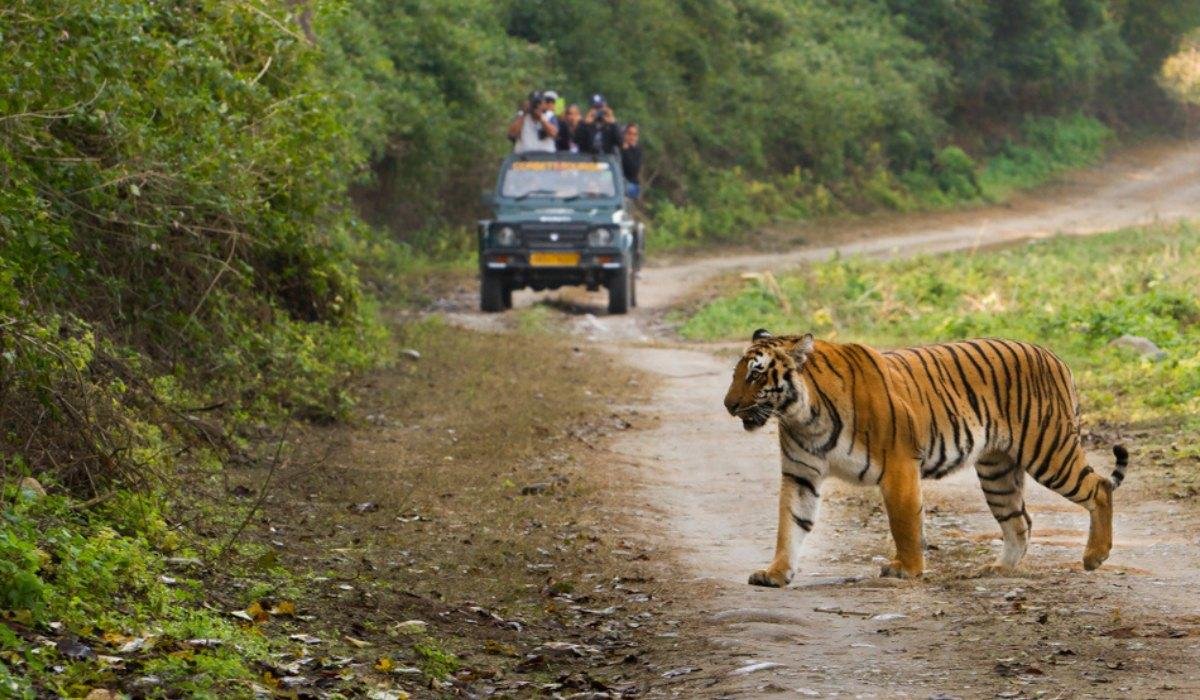
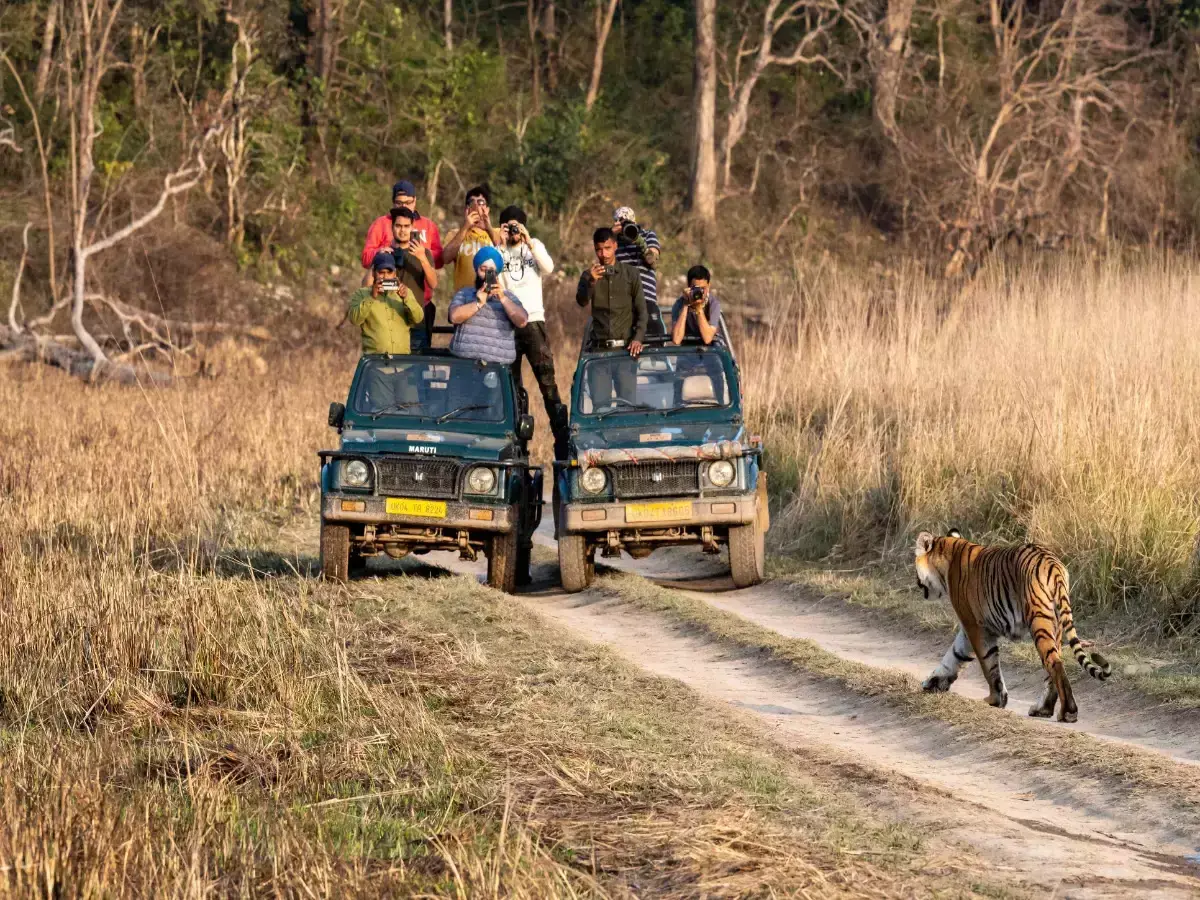
- Tigers and leopards are present, though the terrain makes sightings harder
Practical note
The gate is around 28 km from Ramnagar, which is the longest drive of any zone. For a morning safari that means a very early start. We build that into the itinerary so nobody is surprised at 4:30 in the morning.
Durga Devi usually runs from mid-October to mid-June.
Why this zone
- Best birding zone in Jim Corbett
- Hill and river terrain, unlike any other zone
- Great hornbill and crested kingfisher
- Golden mahseer in the Ramganga
- Stunning misty valley landscapes at dawn
What you might see
Great hornbill
crested kingfisher
brown dipper
elephant
goral
leopard
otter
golden mahseer
A list of what lives here, not a promise of what you will see on the day.
Wildlife does not read itineraries.

 4 Days 3 Nights (+2
Corbett only
Save 10%
4 Days 3 Nights (+2
Corbett only
Save 10%